A New Year’s Tradition: Osechi

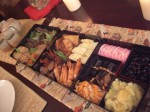
Osechi is the traditional Japanese New Year’s meal comprised of a number of small dishes into a single presentation. Each osechi dish has its own significance: from hope for a bountiful harvest, safety for loved ones, longevity, or fertility. Osechi is served in beautiful, ornate boxes and shared with family to celebrate the arrival of a new year. While the preparation of osechi may seem daunting, it lends a sense of beauty and optimism for the coming year. If you can find the time to prepare even one or two of the dishes listed below, I think you’ll agree that it is a very special and rewarding ritual. .osechiTable {padding:5px;} .osechiDesc {font-style:italic; …

Continue reading

Yaokin Strawberry Cream Roll Cake

This is the first item from the ZenPop Sweets box that I previously reviewed. I chose it mainly because I wanted a small dessert and it looked small and like a dessert. That being said, this is a "kid’s snack" in Japan and sold for a mere 20 yen (20 cents), so it’s unrealistic to expect it to be as refined as larger, adult-marketed shelf stable pastries. And, of course, shelf-stable pastries

Continue reading

Mushrooms Grilled in Foil

Earthy mushrooms are hard to miss in the market this time of year. At our local supermarket we can find brown and white shimeji, brown and white enoki, shiitake, eringi, maitake, nameko, and maitake. At the upscale department store we can find a few other types including the aromatic matsutake.We like to keep mushrooms on hand as they are easy to add to miso soup, sauteed and served over salads or with pasta.This recipe is not very Japanese, but easily finds its place on the Japanese table. Shimeji mushrooms are cut at the base and then separated into pieces and…

Continue reading

Takenoko no tosa-ni

This is a simmered bamboo shoot with dried shaved bonito.Takenoko means bamboo shoot.Spring is nice season to have takenoko in Japan.Tosa-ni is a type of simmered dish which has rich flavor of dried bonito.Takenoko has nice texture and plain taste.Dried bonito has rich taste.This combination makes wonderful taste.

Continue reading

Faux Roe

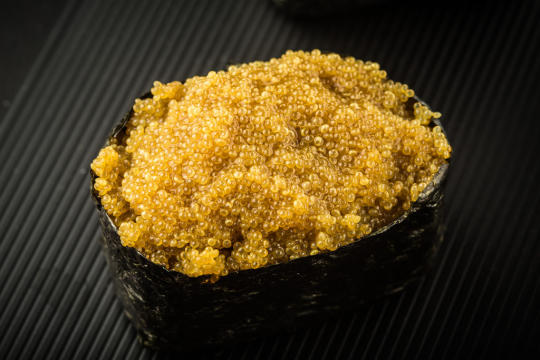
When I first saw the recipe list from Marisa Baggett’s new cookbook, Vegetarian Sushi Secrets, this Faux Roe recipe jumped out at me. How did she manage to create something that looks so similar to real fish roe, and yet is vegetarian? Well now I know – amaranth! This grain is one of those “superfoods” that people go on about, and in addition to being healthy, is the perfect size and shape to imitate fish roe. Add in some turmeric for color, and vegetarian dashi for an almost-fishy flavor, and you’ve got the perfect “faux roe”! Recipe from Vegetarian Sushi Secrets by Marisa Baggett, out today! One batch of this is enough to make both…

Continue reading

Bépocha, Harajuku ベポカ原宿

I know next to nothing about Peru. Other than the fact it’s a looong, thin country in South America facing the Pacific, there’s mountains, something about a Shining Path on the news when I was a kid…oh, and Paddington Bear…I know even less about the food, which is why I was keep to try Bépocha in Harajuku. On a recent Saturday night I finally made my way over there, and ended up glad I did. The food and service are very good. I think I could be back to learn more.I wonder if restaurants in Lima look like this…Seafood ceviche with toasted corn and assorted bits. Spicy. Very good. Tuna ceviche. Also very good. Mashed potato (green mashed potato) with crab…

Continue reading

Christmas Cooking Classes in Yokosuka

I have four Christmas cooking classes coming up. Sign up at the bottom of the page. Christmas Bark December 5th, 13:00-14:45 Cooking room (調理講習室) on the 5th floor of the Yokosuka Lifelong Learning Center aka. Manabikan Parking available for 310 yen for 3 hours onsite. 3000 yen per person or parent and child pair *For safety reasons, only children cooking can attend the class Gingerbread Muffins December 5th, 15:00-16:45 Cooking room (調理講習室) on the 5th floor of the Yokosuka Lifelong Learning Center aka. Manabikan Parking available for 310 yen for 3 hours onsite. 3000 yen per person or parent and child pair *For safety reasons, only children cooking can …

Continue reading

Snacking on the Nakasendo

The Nakasendo (literally “The Way through the Mountains”) is an ancient highway that linked the cities of Kyoto and Tokyo. Dating back to the 7th century, the route was used at its peak during the Edo Period (1600-1868), as one of the Five Highways (“Gokaido”) designated by the Tokugawa shogunate. The advent of modernization in Japan starting with the Meiji Restoration meant that this ancient route became disused, with parts purposefully removed — including some of the honjin inns where the feudal lords stayed — as vestiges of a backward, draconian regime. Walk Japan, however, takes visitors on a unique journey across those stretches that have been preserved or even rediscovered in recent years. In addition to the stunning walks through the countryside and …

Continue reading

Satsuma-age

Satsumaage is a paste made from fish and vegetables. “Satsuma” is the old name for Kagoshima City, where satsumaage got its start, and the “-age” (ahh-geh) part means it’s deep fried. It is very popular in Kyushu. My grandmother is from that area and she used to make this for us all the time. I really love it! Yield: 7-8 patties Time: 30 minutes Ingredients 3/4 lb. cod fillet 1 carrot 1 green onion 1 egg Spices 1 tbsp katakuriko 1/2 tbsp sugar Pinch salt Preparation Chop carrot and green onion Place the cod in a food processor and process into a thick paste, then transfer to a large …

Continue reading

Tohato Harvest Sand Biscuits Mont Blanc flavor

Every year, around Halloween, a bunch of sites will do lists of the best and worst Halloween snacks. The "best" usually are anything covered in or mainly comprised of chocolate and/or peanut butter. The "worst" tend to be anything chalky or in the genre of what the British call "boiled sweets" (hard candy). Basic Harvest Biscuits are the boiled sweet of the cookie world. They’re what you’re

Continue reading

November Seasonal Japanese Seafood

Salmon roe, pulled out of its sac and simply marinated in the sweet soy sauce of Kyushu, is irresistible this time of year. We love it so much it is on the table for breakfast, lunch, and dinner. Crabs are also coming to market. Another highlight this time of year is fresh scallops and oysters, both best when raw.Kawahagi may not be the most beautiful fish to look at, but when cut of its leathery skin, and served as sushi with its liver, it is heavenly.Shirako, or milt, is often from cod fish, but Japanese chefs I speak with say that the best milt …

Continue reading

Sekihan

Sekihan (赤飯) literally means red rice.Sekihan is steamed mochi rice (glutinous rice) mixed with red beans.Usually it is sprinkled with sesame seeds and salt after it is steamed.Originally it is made by steaming with bamboo basket.But, if we cook it at home, we usually cook it with rice cooker.Sekihan is usually served on celebratory and congratulatory occasions.

Continue reading

Curry Mayonnaise

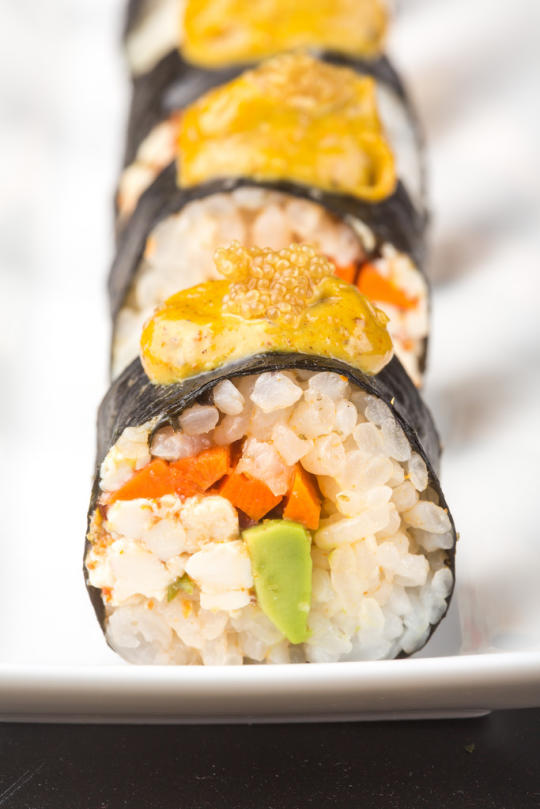
One batch of this is way, way more than you need for a batch of the spicy tofu rolls from Marisa Baggett’s Vegetarian Sushi Secrets. However, you should definitely still make a full batch. Because if you’re anything like me, you will find yourself addicted to this amazing curry mayonnaise, and start putting it on everything. Eat it with sushi. Slather it on sandwiches. Dip vegetables in it. The possibilities are endless! As for me, I’m off to go make another batch. Like I said… addicted! Recipe from Vegetarian Sushi Secrets by Marisa Baggett, out today! Recipe Ingredients 1 cup (250 ml) mayonnaise…

Continue reading

Umami Burger, Kita Aoyama UMAMI BURGER 青山店

Umami Burger in Kita Aoyama is an LA concept based on Japanese principles that has made it full circle back to Japan. The Japanese principle in question is that of umami – the 5th taste that Westerners were not widely aware of until recent times.To me, umami is basically a savouriness given to food by things like bacon, fish sauce, truffles, tomatoes and so forth. Japanese umami is based on the basic and essential ingredients of Japanese cooking – katsuo and konbu.There’s nothing Japanese about Umami Burger. The umami in this joint kind of hits you over the head in every dish and then drenches you in oil. Actually I love that kind of food, but it’s a recipe for a heart attack …

Continue reading

Time saving prep ahead lunch box fillers

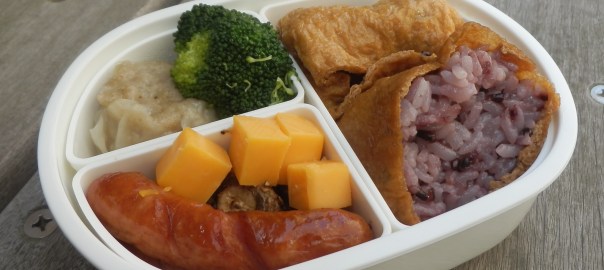
Now that the temperature is heating up, it’s time to spend less time in the hot kitchen making lunches. Mini Burger Patties – They are top with salsa and cheese top with gravy top with bbq sauce and canned pineapple top with ponzu and grated daikon cut up over a salad add to a lettuce wrap Daikon Steaks – Recipe here. They get softer after being frozen but I prefer them that way. eat as is mix in with simmered veggies (nimono) dice and mix with canned tuna and mizuna – no dressing needed Steamed Broccoli (or other veggie that freezes well) eat as is or topped with dressing top with cheese cut up and mix in pasta add to an omelette…

Continue reading

Kyoto Restaurant Recommendation: Shiawase Gohan (Happy Meal)

This is a guest post from one of my clients: Takaokaya. Takaokaya has been making beautifully handcrafted bedding and cushions in Kyoto since 1919.  Third generation proprietor, Koichi Takaoka is going to tell us about one of his favorite Kyoto restaurants: Shiawase Gohan. Takaoka-san says: Shiawase Gohan (幸せごはん) means happy meal, or happy food. Shiawase Gohan opened about three years ago and owner chef, Nakamura-san, I have known for about 15 years. He was chef at a restaurant a friend introduced me to. I went there for many years and then when he moved onto a new restaurant I followed him there and continued to enjoy his delicious creations…

Continue reading

Ebichiri

Ebichiri (lit. ”shrimp chili”) is grilled shrimp with doubanjiang, which may or may not contain chili peppers (based on which level of spiciness you choose). Originally a Szechuan dish from China, Ebichiri has been modified to fit the Japanese palate. Yield: 2 servings Time: 25 minutes Ingredients 18 pieces of shrimp (216g) 1 clove of garlic (minced) 1 tbsp ginger (minced) 1/4 cup green onion (chopped) Spices 2 tbsp sake (for uncooked shrimp) 1/4 tbsp salt and a dash of pepper (for uncooked shrimp) 2 tbsp katakuriko (potato starch for uncooked shrimp) 1/2 tbsp oyster sauce 1 tbsp soy sauce 1 tbsp sugar 4 tbsp ketchup 1 tbsp chicken soup powder 1 tbsp doubanjiang dash of salt and pepper Preparation De-vein shrimp, and wash with cold water Put shrimp in a small bowl, add salt and pepper…

Continue reading

Tohato Ame Oni Bloomin’ Onion Snack (sour cream)

I read a lot of cooking blogs because I’m always interested in expanding my range of cooking skills. There was a time, for instance, when I was trying to master the art of making a really good steam cake. One of the Chinese recipes said something to the effect of, ‘We Chinese traditionally ate fruit after meals for dessert, but, ha, ha, Western cuisine has corrupted us.’ Every time I read

Continue reading