
Price: $59.99
(as of Apr 10,2021 16:15:16 UTC – Details)

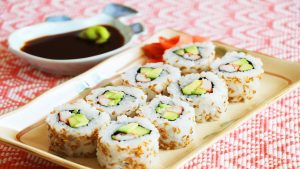
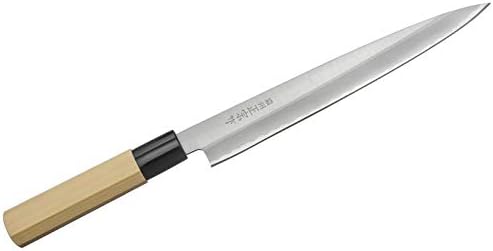
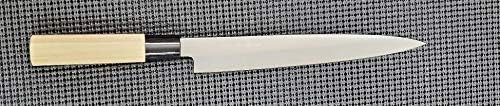
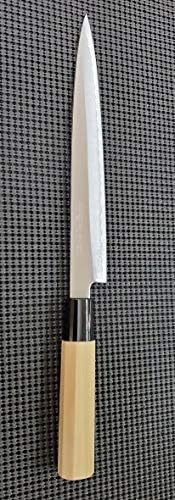
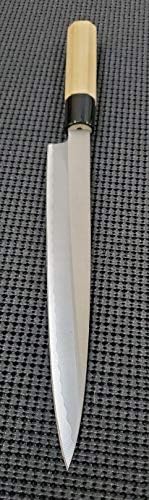
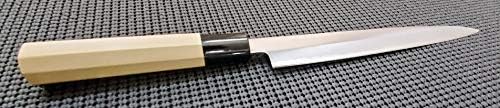
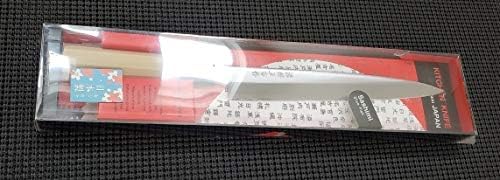
A kitchen knife produced in Seki, Gifu Prefecture, one of Japan’s leading knife-making cities. The white wood pattern is pleasant to the touch and fits easily in the hand. A sashimi knife (Yanagi) is a traditional Japanese knife that is used to cut fresh fillets into nearly transparent slices. Ideal for preparing sushi, fish carpaccio and other dishes with very delicate ingredients. The long, narrow and stiff blade ensures high precision, and the one-sided sharpening ensures a clean cut. It is best to use the Yanagi knife to make a steady motion in one direction: towards yourself. Characteristics Product size (cm): blade length about 21cm. Product Weight (g): 85g Material: Blade: High Carbon Steel, Handle: Natural Wood. Country of origin: Japan Individual form of packing: blister. Unit packing size (width): 35.5 Individual packing size (depth): 7.5 Packing size (high): 2.5 Weight of individual package (g): 160
Specifications. Blade: High carbon steel SK4, Hardness – 60 HRC +/- 1, Handle: Natural magnolia wood, Country: Japan, Overall length – 33.5 cm, Blade length – 21 cm, Blade width – 3 cm, Blade thickness – about 2.1 mm., Weight – about 80 g.
The sharp edge of this knife is made by seasoned artisans to a mirror polish at 12-15° with single-bevel style. Because of it this sharp blade without crushing or tearing the structure of the ingredients able to slice sashimi, sushi, fish and etc. into thin slices.
Ergonomic Magnolia Handle – The Ergonomic Handle of knife has perfect grip and great balance, so it’s a classic Japanese knife handle, the design of which was developed more than two centuries ago and is still the best in the opinion of Japanese craftsmen.
Easy Care – This Yanagiba Sashimi Knife is easy and fast to clean. NOTE! For long knife life, for protecting the sharpness and glossiness of the knives, please DO NOT wash the knives in dishwasher. Clean and dry them after hand washing to get the most out of them. For a long service life, keep it separately from other kitchen utensils, always wash it after use and wipe it dry. In this case, the long service of your knife will be like your reward for taking care of it.
With the right using this knife, frequent sharpening is not required. But sooner or later you will come across this. In this case try to entrust your knife sharpening to a professional. If you do it yourself, then do not forget that sharpening is carried out in several stages using sharpening stones pre-soaked in water, starting with large grains from 400 to 1500 and above. The angle of sharpening of the blade should be constant about 12-15 degrees.