Price: points - Details)

Nick Sakagami is the only person outside of Japan to earn the designation osakana meister, or fish master. In this book he shares his vast knowledge of all things sushi, including sourcing, evaluating, and preparing fish, plus delicious recipes for sushi, soups, vegetable dishes, and more, that are perfect for the home cook.
Sakagami, who owns his own seafood importing and consulting business, starts with the fundamentals, including essential tools such as knives and cutting boards. A primer on buying seafood features useful tips on sourcing and assessing various types of quality fish, plus fascinating information on fishing methods and sustainability.
All aspects of fish preparation are covered, accompanied by ample photos. Recipes, some contributed by respected chefs, are quick and easy to put together and feature a variety of nigiri (tuna, unagi, vegetable), maki (spicy tuna roll, spider roll, dragon roll), and sashimi, plus seared albacore tuna salad, sushi smoked salmon, Japanese pickles, red miso soup with eggplant, and more.
Sushi Master also includes:
- Instructions for making sushi rice, plus step-by-step photos for making rice balls for nigiri
- Gorgeous recipe and instructional photos that will guide you through several processes
- Recipe and meal-building tips
- A glossary of terms and a resource list for recipe ingredients and tools
Sushi Master is your definitive and comprehensive guide to mastering the art of sushi.
From the Publisher
FUNDAMENTALS


Tools
Sushi starts with rice, so having a rice cooker is fundamental. As you will also need to cut fish and vegetables, knives and a cutting board are required. The basic tools for sushi making are found in most kitchens. You may already own many of these tools.
Buying Seafood
The biggest challenge to making sushi is acquiring high-quality seafood. Nowhere is it truer that you get what you pay for than in the seafood industry. Sure, sometimes you find good deals when the sellers or packers must move their inventory quickly.
Ingredients
The basic ingredients used to make sushi are seafood and rice flavored with vinegar, sugar, and salt. Western sushi is sometimes wrapped in seaweed, tofu skin, or very thinly sliced cucumber. It may be flavored or served with a host of condiments, and these go beyond the usual soy sauce and wasabi.
Fish Preparation
Preparation is extremely important in sushi making. A number of saku (see page 58) portions of fish resting inside the glass showcase at sushi bars look simple, but the chefs worked for hours to prepare them. I will show you how to prepare fish for sushi.
RECIPES


Rice
Rice is the staple carb for Japanese people. The rice farm is a centerpiece of “Satoyama” scenery, which represents a coexistence of people and nature in their local village. In Japan, rice was also used for centuries as a form of currency. When a Japanese chef prepares fish, the chef first cuts the sashimi or nigiri portions. Smaller pieces and oddly shaped pieces are used for rolls. Respected chefs in Japan don’t let anything go to the trash bin, and they take pride in that. They can make fish chips out of fish skin; fish bones and fins, of course, make soup stock. Certainly we (myself included) are not skilled enough or have the time to do all those things, but we can at least make rice bowls and pokes—save fish while saving money!
Appetizers
Sushi chefs like their menus to reflect what’s in season—both fish and vegetables—in everything they serve, including appetizers. As with soups (see page 148), appetizers are a good way to utilize leftover fish. Often, smaller portions of fish not big enough to make it as sashimi or nigiri become appetizers prepared with different cooking methods and sauces. From salty pickles to spicy peppers and smoked salmon, the food that comes out before the meal should make you hungrier for more. As with sushi, these appetizers are about texture and flavor, as well as being a feast for the eyes.
Soups
Soup is served after sushi in Japan—which is opposite of how it is done in the Western world. Japanese soups tend to be healthful, healing, and simple to make. The most widely known Japanese soup is made with miso, a paste made from fermented soybeans and barley or rice malt. It makes a robust and satisfying broth. There are also clear soups that can be sipped like a drink, but still have strong body. Many Japanese soups are made with dashi, a very simple broth that is a staple of Japanese cooking and made from just two ingredients—water and an ingredient of your choosing, such as kombu, bonito flakes, or shiitake mushrooms.
SUSHI


Maki
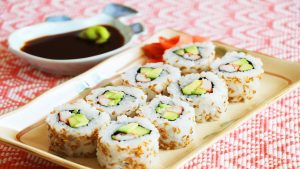
Sustainability comes not only from saving fish in the oceans but also from getting the most out of the leftover fish in your kitchen—a simple way is to make maki, rolled sushi. Maki is what most people outside Japan picture when they think of sushi. It is formed with the help of a bamboo mat known as a makisu. Maki is generally wrapped in nori (seaweed), but is also occasionally wrapped in soy paper or cucumber. When buying nori, look for high-grade nori—it will reward you with less breakage when you roll it up.
Nigiri
Nigiri is a type of sushi consisting of a small rice ball topped with fish or another seafood with a dab of wasabi between. The basic method of making nigiri is always the same, but the fish preparation varies slightly for each fish type. Squid, for example, requires more subtle knife work because its flesh is firm compared to uni (sea urchin), whose flesh is creamy. The trick with uni is buying the right fish (see page 42). The same goes for buying unagi (eel; see page 42).
Sashimi
While nigiri contains rice and may contain raw fish, sashimi is thinly sliced raw meat—usually fish, such as salmon or tuna—served without rice. Making sashimi looks easy. At sushi bars, chefs just slice the chunk of fish and place the slices on plates. It must be easy. They do it so fast and effortlessly, too. Well, go ahead and try. You’ll end up with fish nuggets rather than thinly sliced sashimi. All fish is soft and somewhat fragile. So, you want to handle it as little as possible.
RECIPES


Seared Albacore Tuna Salad CHEF KEN NAMBA | KIRIKO SUSHI | Los Angeles, CA
Albacore tuna is a very versatile fish for cooking. It is good for sashimi and sushi, and works well with ponzu sauce, soy sauce, sesame seed dressing, or miso dressing. It is also a sustainable alternative to other tuna species that have been overfished by the “purse seiner” method (for canned tuna, see page 34) in some parts of the ocean.
Sushi Smoked Salmon CHEF KEN NAMBA | KIRIKO SUSHI | Los Angeles, CA
This smoked salmon may not be what you’re used to. The outside is lightly cooked and smoked, but the inside is still sushi salmon. Savor the different textures as you bite into it. The smoked salmon also makes a versatile base for different appetizers—wrap the smoked salmon with mango, dip it in tartar sauce, use it for nigiri, or make salmon tartar with it. It also makes a flavorful sandwich.
Kappa Maki Traditional Cucumber Roll
This is one of the most basic rolls and it happens to be my daughter’s favorite. I remember eating this as a healthy snack growing up. Kids can start learning how to make sushi with this roll, which can also be made with the nori on the inside (see “The Inside-Out Option,” page 107) for those who prefer not to see it. You can replace the cucumber with takuan (sweet pickled relish).
Dashi
Dashi is an essential of Japanese cuisine. Because it is so well regarded as a flavor enhancer, even French chefs are eager to incorporate dashi into their cuisine. One reason for its popularity is dashi can swing both ways—it can make dishes saltier or sweeter, without adding sugar or salt. Naturally derived and healthy, dashi can be made from fish, meat, and vegetables.